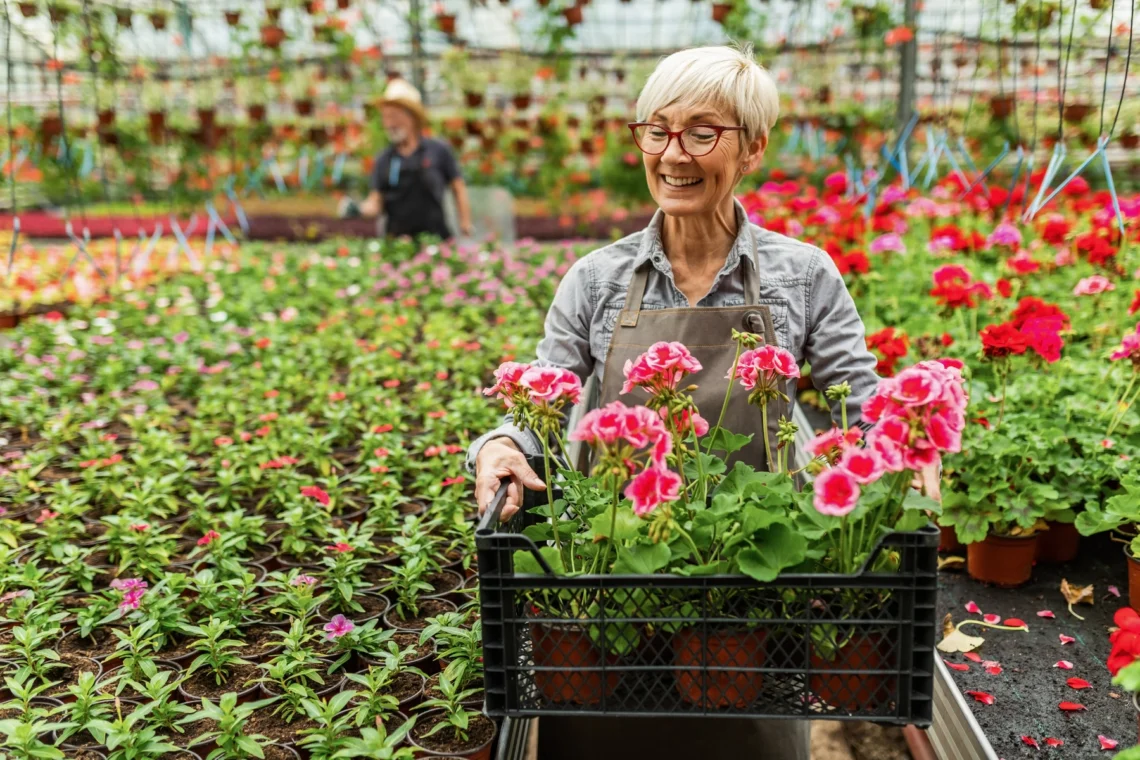
The Netherlands is one of Europe’s leading centres for flower cultivation, exports and trade. The country is particularly well known for its extensive greenhouses, tulip fields and modern distribution centres supplying markets around the world. Thanks to its well-developed horticultural sector, flower-related jobs are available both seasonally and throughout the year. The work mainly involves caring for plants, cutting flowers, sorting, packing and preparing orders for dispatch. You could work in a greenhouse, handle tulip bulbs or pack bouquets in a processing facility.
Pay starts at the Dutch statutory minimum wage, which, as of 1 July 2026, stands at €14.99 gross per hour for workers aged 21 and over. Working days usually start early in the morning, and most tasks involve standing for long periods in varying temperatures.
What Does Working with Flowers in the Netherlands Involve?
The Netherlands is one of the world’s leading centres for flower cultivation and trade. Jobs in this sector cover the entire process, from plant care and harvesting to bouquet preparation, order picking and transportation. Your day-to-day responsibilities will largely depend on where you work.
Greenhouse Work – Growing and Cutting Flowers
Working in a greenhouse (kas) involves looking after plants, harvesting flowers and preparing them for sale. You may work with roses, chrysanthemums or gerberas, for example. Your duties include cutting stems at the right stage of flowering, removing damaged leaves and transporting flowers using specialised trolleys.
Greenhouse jobs in the Netherlands are available throughout the year. However, you should be prepared for high temperatures and humidity, particularly during the summer months. Attention to detail is essential, as flowers must be handled carefully to prevent damage before they reach the market.
Working with Flower Bulbs and Tulips
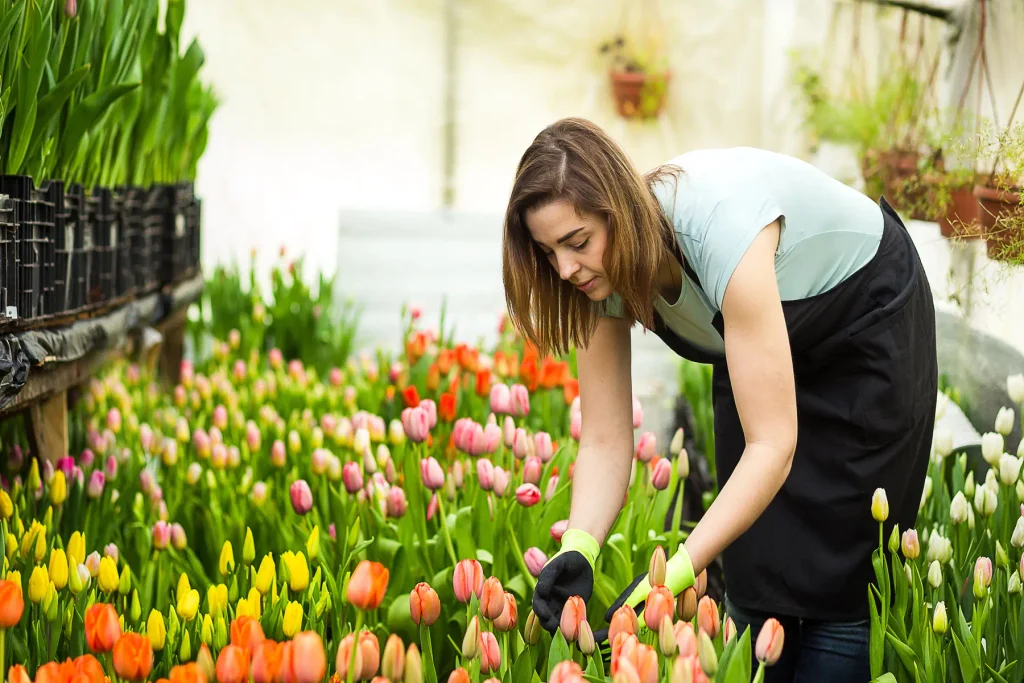
Jobs involving tulips mainly include sorting, harvesting and peeling flower bulbs. You can find work in fields, horticultural farms and production facilities. At some workplaces, you may also be involved in forcing tulips, a process that prepares them to bloom outside their natural flowering season.
This type of work is more seasonal than jobs involving cut flowers. It requires good manual dexterity and attention to detail. It is also worth wearing protective gloves, as contact with bulbs and stems can cause skin irritation.
Sorting, Packing and Arranging Bouquets
At flower-packing facilities, your job will involve sorting flowers according to stem length, size and quality. You will then arrange bouquets according to specific designs, secure them and pack them for transport.
The work often takes place on a production line, where speed and meeting productivity targets are important. You may also work in a cold storage facility, where temperatures are considerably lower than in other areas. Proper workwear is therefore essential.
Working at Flower Auctions and in Logistics
The flower industry is about more than growing and packing plants. You can also find employment in logistics, including at flower auctions such as Royal FloraHolland in Aalsmeer.
Your responsibilities may include picking orders (order picking), preparing flower trolleys and directing products to the correct dispatch areas. This type of work requires good organisational skills and the ability to work quickly. Due to the nature of the flower trade, shifts often start very early in the morning.
Where Can You Find Flower Jobs in the Netherlands and When Is the Season?
Most flower-related job opportunities are concentrated in regions associated with plant cultivation and distribution. The main locations worth considering include:
- Westland – a region known for its large number of greenhouses and flower-growing businesses.
- Aalsmeer – an important centre for flower trading, auctions and logistics.
- Bollenstreek – an area between Haarlem and Leiden, particularly well known for growing flower bulbs and tulips.
- Noordoostpolder and Noord-Holland – regions where you can also find seasonal jobs involving flower bulbs.
Seasonal demand depends on the type of work. Greenhouses and cut-flower packing facilities operate throughout the year, although demand for workers increases ahead of Valentine’s Day, Mother’s Day and Christmas. Jobs involving flower bulbs are mainly available in summer and autumn, while tulip forcing takes place primarily during winter and spring.
How Much Can You Earn Working with Flowers in the Netherlands?
Pay for flower-related jobs in the Netherlands starts at the statutory minimum wage, which, as of 1 July 2026, is €14.99 gross per hour for employees aged 21 and over. If you work in a greenhouse, the CAO Glastuinbouw collective labour agreement is also relevant.
Minimum Wage and Collective Labour Agreement Rates (CAO)
The Netherlands has an hourly minimum wage (WML), which is updated twice a year, on 1 January and 1 July. Workers under the age of 21 are entitled to lower minimum rates, depending on their age.
The greenhouse horticulture sector is covered by the CAO Glastuinbouw collective labour agreement, which applies from 1 April 2026 to 31 March 2027. It provides for two pay increases for salary grades C to H: 2.15% from 1 August 2026 and a further 1.1% from 1 January 2027. The lowest grade, B, is linked to the statutory minimum wage.
If you work through a temporary employment agency (uitzendbureau), your pay should reflect the remuneration rules applicable at the company where you are assigned. Before signing your contract, check which hourly rate and salary grade apply to your position.
Gross vs Net Pay and Accommodation Deductions
Gross pay is the amount you earn before tax and social security contributions are deducted. Net pay is the amount you actually receive in your bank account. You should not base your decision to move abroad solely on the net salaries advertised in job listings, as these depend on factors such as tax credits and deductions.
If your agency provides accommodation, it may deduct housing costs from your wages, but certain restrictions apply. At present, the deduction cannot exceed 25% of the statutory gross minimum wage. This is permitted only if you give your written consent and the accommodation meets the required certification standards, such as those set by SNF. The deduction must also be clearly itemised on your payslip.
The Dutch government has announced plans to abolish the possibility of deducting accommodation costs from the minimum wage from 1 July 2028. However, this is a planned change, so it is worth checking the latest regulations before travelling.
What Can Increase Your Earnings? Overtime, Allowances and Holiday Pay
The number of hours you work is one of the main factors affecting your earnings. During busy periods, you may have the opportunity to work overtime. The rules governing overtime payments and any additional rates depend on the applicable collective labour agreement or your employment contract.
Another important part of your remuneration is holiday allowance (vakantiegeld), which amounts to at least 8% of your gross salary. Check whether it is paid together with your regular wages or separately. Also bear in mind that the number of available working hours may decrease outside peak season, directly affecting your monthly earnings.
What Does a Typical Working Day in the Dutch Flower Industry Look Like?
A typical working day in the Dutch flower industry starts early in the morning and involves several hours of intensive physical work. The exact schedule depends on the workplace, your position and the season. A typical day in a greenhouse or packing facility might look like this:
- 5:00–6:00 am – Travelling to work. You either take a minibus provided by the agency or make your own way to the workplace.
- 6:00–6:30 am – Starting your shift. You receive instructions about your duties and are assigned to a particular section or production line.
- 6:30–10:00 am – Carrying out your tasks. You may be cutting, sorting or packing flowers, or preparing orders.
- 10:00–10:30 am – Break. You have time to rest and eat.
- 10:30 am–2:00 pm – Continuing work. You carry on with your assigned tasks while maintaining the required quality and pace.
- 2:00–3:00 pm – Finishing your shift. Depending on the workplace, you may need to clean your workstation and prepare the area for the next shift.
This is only an example, as starting and finishing times can vary between workplaces.
You should be prepared to work on your feet, perform repetitive movements and maintain a steady pace. In cold storage facilities, temperatures may be only a few degrees above zero, so you will need warmer clothing. Greenhouses, on the other hand, can become extremely hot and humid during the summer. During particularly busy periods, shifts may also be extended.
Who Can Work with Flowers in the Netherlands? Requirements
Flower-related jobs in the Netherlands are also available to people with no previous experience in horticulture. Most positions do not require specialist qualifications. The main requirements are physical fitness, attention to detail and a willingness to work shifts.
The basic requirements include:
- A valid ID card or passport – Polish citizens do not need a work permit to work in the Netherlands.
- A BSN number, which is the Dutch citizen service number. An employment agency may help you obtain one.
- Good physical fitness and the ability to stand for extended periods.
- Attention to detail and the ability to carry out repetitive tasks.
- The ability to cope with changing temperatures and working conditions.
Knowledge of Dutch is generally not required. However, basic English can make communication with supervisors easier. For logistics positions, a forklift licence (heftruck) can also be an advantage.
Pros and Cons of Working with Flowers in the Netherlands
Working in the flower industry can be a good option if you are looking for employment abroad without needing previous experience. However, it is worth understanding the less attractive aspects of the job before you decide to move.
The main advantages include:
- The opportunity to start working without previous experience.
- Legal employment with wages protected by Dutch regulations.
- Accommodation and transport often provided by employment agencies.
- The possibility of travelling and working together with a partner or friends.
Potential disadvantages include:
- Seasonal fluctuations in the number of available working hours.
- Physically demanding tasks, often involving standing for many hours.
- Having to work in cold storage facilities or overheated greenhouses.
- Early starts and productivity targets.
How to Find a Reliable Flower Job in the Netherlands
Before travelling to the Netherlands, make sure you check that the employment agency is legitimate and that the working conditions are clearly explained. If recruitment takes place in Poland, the agency must be registered in the National Register of Employment Agencies (KRAZ). For Dutch employment agencies, membership of organisations such as ABU or NBBU can be an additional sign of credibility.
Before signing a contract, make sure you check the following:
- Does the agency operate legally and provide its full company details?
- Does the accommodation have SNF certification?
- What is the hourly rate, and how many working hours per week are guaranteed?
- Does the contract clearly explain the rules for overtime?
- What deductions will be made for accommodation, transport and other services?
If you are looking for a job in this sector, browse the latest job offers in the Netherlands on europa.jobs. Compare several listings and choose one that clearly explains the pay, accommodation arrangements and number of guaranteed working hours.
Related articles:
- https://blog.europa.jobs/en/art-greenhouse-worker-in-the-netherlands-working-day-salary-and-requirements/
- https://blog.europa.jobs/en/art-working-in-germany-and-the-netherlands-in-autumn-which-industries-are-hiring-the-most-workers/
FAQ – Frequently Asked Questions
1. Do you need to speak a foreign language to work with flowers in the Netherlands?
Usually not. Most jobs involving sorting, packing and greenhouse work do not require knowledge of Dutch or English. Employment agencies often provide Polish-speaking coordinators, although basic English can make communication with supervisors easier.
2. Are flower jobs in the Netherlands available all year round?
Yes, particularly in greenhouses and cut-flower packing facilities. Demand for workers is highest ahead of Valentine’s Day, Mother’s Day and Christmas. Jobs involving flower bulbs and tulips, on the other hand, are more seasonal.
3. Can working with tulip bulbs damage your skin?
Yes. Prolonged contact with tulip bulbs and stems can cause skin irritation or allergic contact dermatitis on the hands in some people. This is why wearing protective gloves is important. If you are prone to skin allergies, let the employment agency know before travelling.
4. How many hours a week do people work in the Dutch flower industry?
Most positions are full-time, and overtime may be available during peak season. Outside the busy periods, the number of working hours may be lower. Before travelling, ask how many hours per week are guaranteed, as your earnings will depend on the number of hours you actually work.
5. Can you travel to the Netherlands to work with flowers with your partner or friends?
Yes. Many employment agencies recruit couples and small groups of friends. Some also offer shared accommodation. If you want to stay in the same room or work the same shift, make sure these arrangements are confirmed before signing your contract.