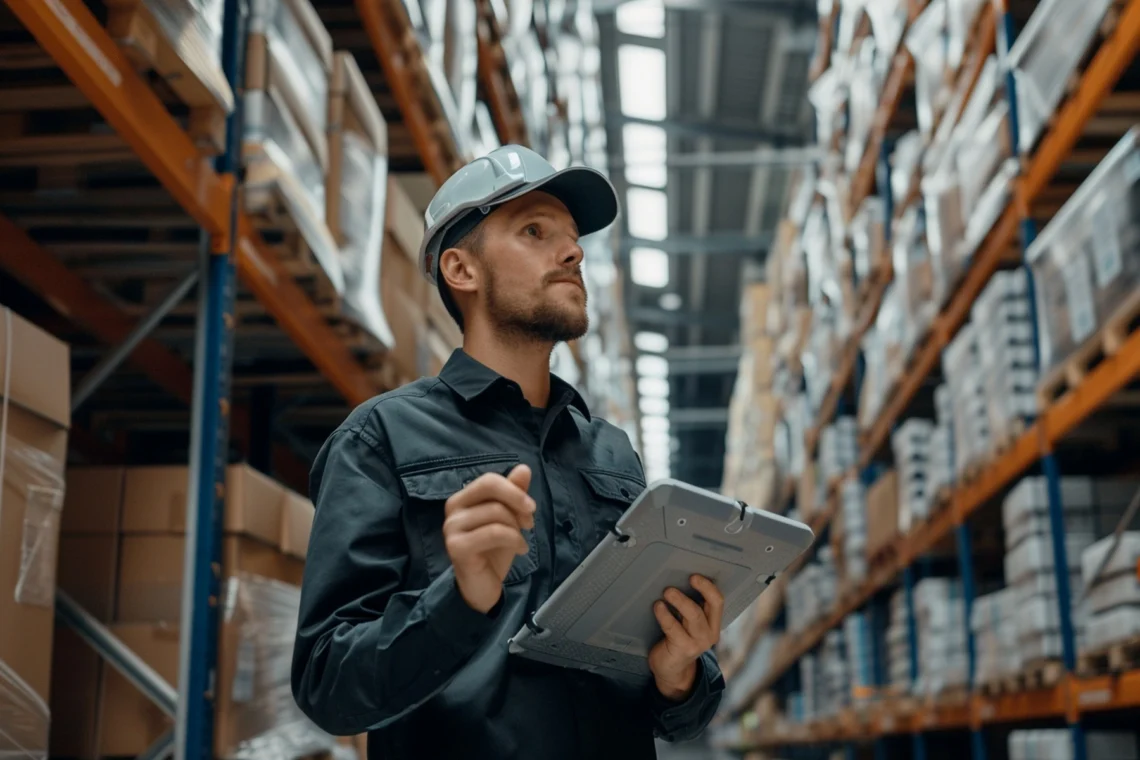
An order picker is a warehouse worker responsible for picking orders, which involves collecting products from shelves according to a picking list, checking that they match the order and preparing them for dispatch. The job is also known by its German name, Kommissionierer. Order pickers are mainly employed in distribution centres, e-commerce warehouses, food wholesalers and spare parts warehouses. The job often does not require previous experience or knowledge of a foreign language, particularly in Germany and the Netherlands.
Find a warehouse job as an order picker on europa.jobs!
Order Picker vs Warehouse Operative, Packer and Forklift Operator: What Is the Difference?
An order picker is a specialised warehouse role focused primarily on collecting products according to customer orders. Other warehouse positions involve slightly different responsibilities.
| Job title | Main responsibility | Are qualifications required? |
|---|---|---|
| Order picker | Picking and completing orders | Usually not |
| Warehouse operative | Receiving, storing and issuing goods | Depends on the duties |
| Packer | Packing and protecting products | Usually not |
| Forklift operator | Moving and storing goods using a forklift | Yes, relevant certification is required |
In practice, these responsibilities may overlap. An order picker may also pack products or operate an electric pallet truck.
What Does an Order Picker Do? Duties Step by Step
The main responsibility of an order picker is to collect the correct products in the required quantities and prepare them for further transportation. What does the process look like?
- Receive an order – you get a picking list on a handheld scanner or receive instructions through a headset.
- Locate the products – you go to the designated shelf location, which is the specific storage area where the goods are kept.
- Pick the products – you check the labels, select the correct item and confirm that it has been picked.
- Assemble the order – you place the goods on a pallet or in a container according to the warehouse procedures.
- Check the order – you report any missing, damaged or incorrect products.
- Hand over the order – you pass the completed order on for inspection, packing or wrapping in protective film before dispatch.
Depending on the company, you may also be responsible for replenishing shelves, helping with incoming deliveries or processing returns.
Order Picking Methods: What Do Pick-by-Scan, Pick-by-Voice and Pick-by-Light Mean?
Warehouses use various systems to make it easier to locate products and reduce picking errors. The three most common solutions are:
- Pick-by-scan – you use a handheld scanner or a device worn on your wrist. The screen displays the location and quantity of products to be picked. You then scan the goods to confirm that the task has been completed. This is one of the easiest methods to learn and often does not require knowledge of a foreign language.
- Pick-by-voice – you receive instructions through a headset. The system tells you where to go and how many products to pick. Instructions may be available in the local language, English and sometimes even Polish.
- Pick-by-light – shelves are fitted with indicator lights and displays showing where to pick the products and how many items are required. Your task is to collect the correct product and confirm that the instruction has been completed. This system is often used when picking small items.
It is also worth knowing that warehouses may operate according to two different models. In a person-to-goods system, you move around the shelves yourself. In a goods-to-person system, products are brought directly to your workstation using conveyor belts and automated equipment.
What Does a Typical Day as an Order Picker Look Like?
Order picking is usually carried out on a shift basis, with two or three shifts per day, including night shifts. At the beginning of your shift, you attend a short briefing, collect your scanner or headset and receive information about the tasks assigned for the day.
You spend most of your working time walking between shelves, picking products and stacking them on pallets. You should be prepared to take a lot of steps, lift boxes and maintain a steady working pace.
In food warehouses, you may be assigned to a chilled storage area or freezer. Your employer should provide suitable protective clothing. Breaks are granted in accordance with the employment regulations in the country where you work.
Productivity Targets: What Is Pick Rate?
Pick rate is a productivity target that determines how many products or order lines an order picker should complete within a specific period. Warehouses use it to monitor employees’ working speed. When you start a new job, you will usually go through an induction period during which you learn how the system works and become familiar with the relevant procedures. Your productivity and accuracy may also affect whether you receive performance bonuses.
Requirements: Who Can Become an Order Picker?
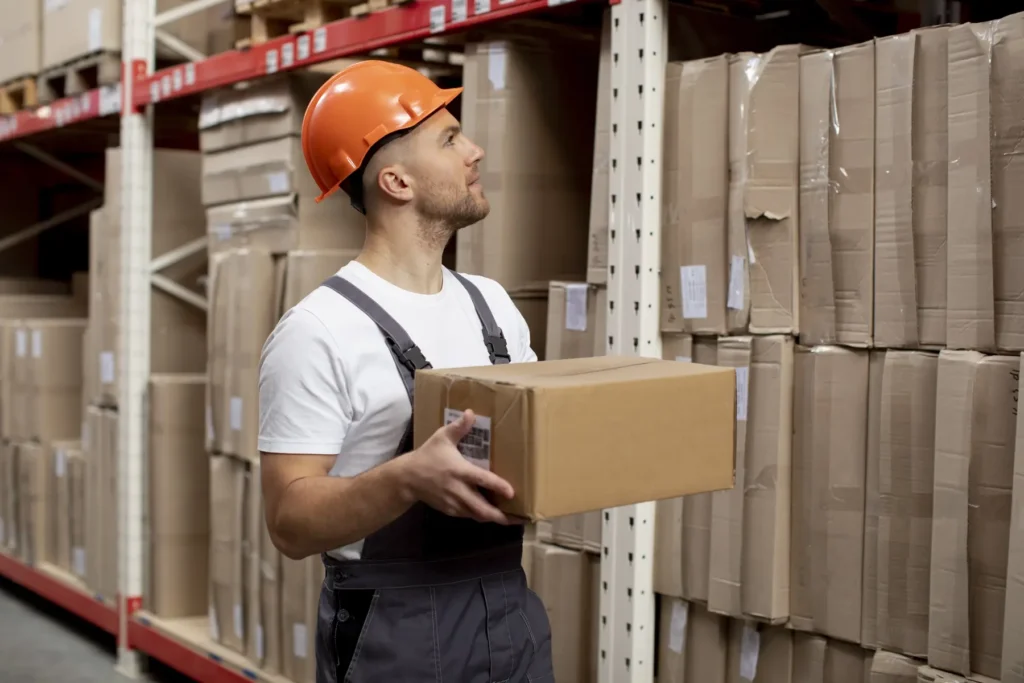
Order picking jobs often do not require previous experience or specialised qualifications. This makes the position suitable for people who are just starting their professional careers.
The main requirements include:
- good physical fitness and the ability to stay active throughout the shift;
- accuracy and the ability to concentrate;
- the ability to perform repetitive tasks efficiently;
- willingness to work shifts, including nights;
- basic skills in operating warehouse equipment.
Many job offers, particularly those involving pick-by-scan systems, do not require knowledge of a foreign language. Having a forklift licence is an additional advantage. In Poland, this means UDT certification, while in Germany, the relevant qualification is known as a Staplerschein. These are not always mandatory, as some employers provide on-site training.
You may not always need to prepare a CV either. In many recruitment processes, completing an application form or having a telephone interview is enough. You can also check out our guide on how to write a CV in a foreign language.
How Much Does an Order Picker Earn in 2026?
Order picker salaries start at the statutory minimum wage in the country concerned. However, the actual rate depends on the region, type of warehouse, working shifts and form of employment.
Order Picker Salary in Poland
As of 1 January 2026, the minimum wage in Poland is PLN 4,806 gross per month. The minimum hourly rate for civil law service contracts is PLN 31.40 gross. According to the Ogólnopolskie Badanie Wynagrodzeń salary survey published by Wynagrodzenia.pl, the median monthly salary for an order picker at specialist level is PLN 6,450 gross. These figures are indicative and may vary depending on experience and company size.
Order Picker Salary in Germany
As of 1 January 2026, the statutory minimum wage in Germany is €13.90 gross per hour. It will increase to €14.60 on 1 January 2027. Employees hired through temporary employment agencies may be covered by the DGB/GVP collective bargaining agreement. From 1 September 2026, the lowest pay group under this agreement receives €15.33 gross per hour.
Order Picker Salary in the Netherlands
As of 1 July 2026, the statutory minimum wage in the Netherlands for employees aged 21 and over is €14.99 gross per hour. In the logistics sector, wages may also be regulated by collective labour agreements known as CAOs, which set pay rates and industry-specific allowances. Employees are also entitled to at least 8% holiday allowance (vakantiegeld), in accordance with the applicable rules.
What Factors Affect an Order Picker’s Salary?
Several factors can influence how much you earn:
- additional pay for night shifts, weekends and public holidays;
- overtime pay;
- possible allowances for working in chilled storage areas or freezers;
- performance and attendance bonuses;
- additional qualifications, such as a forklift licence;
- accommodation deductions if you travel abroad through an employment agency.
Before signing an employment contract, check your basic hourly rate and which additional payments are guaranteed. If you are planning to work abroad, also pay attention to accommodation and transport costs.
Where Can You Find Order Picker Jobs?
Order picker vacancies are available both in Poland and abroad. Many job opportunities can be found in Germany, the Netherlands, Belgium and Austria, often with accommodation and transport to work provided. In Poland, it is worth checking vacancies at logistics centres and warehouses located near major cities.
You can find current vacancies using the order picker job search on europa.jobs. If you are planning to move abroad for work for the first time, take a look at our guide to finding your first job abroad.
Related articles:
- https://blog.europa.jobs/en/art-preparing-for-seasonal-work-in-the-netherlands-tips-and-checklists/
- https://blog.europa.jobs/en/how-employers-can-make-job-opportunities-easier-to-assess/
Frequently Asked Questions (FAQ)
1. What is an order picker?
An order picker is a warehouse worker responsible for picking customer orders. This involves collecting products from shelves according to a picking list and preparing them for dispatch. Order pickers usually work with scanners, headsets or light-based systems.
2. Is order picking a physically demanding job?
Yes, it is a physically demanding job. You spend most of your shift walking or standing, lifting boxes and completing tasks within specific time limits. The first few weeks are often the most challenging, as you need time to get used to the duties and productivity targets.
3. Does an order picker need to speak German or English?
Usually not, especially when working with a pick-by-scan system. However, for pick-by-voice jobs, knowledge of a foreign language may be required if the system does not support instructions in Polish.
4. Does an order picker need a forklift licence?
Not always. Many positions only require you to operate an electric pallet truck, which your employer may teach you to use on site. However, UDT certification in Poland or the relevant forklift qualification in Germany can be an additional advantage.
5. Are order picking jobs in cold storage facilities better paid?
They can be better paid if the employer or applicable collective agreement provides an allowance for working in low temperatures. However, this is not guaranteed. Before accepting a job, check the employment contract and find out what protective clothing will be provided.
6. Can you get promoted as an order picker?
Yes. Once you have gained sufficient experience, you can progress to positions such as forklift operator, quality controller, shift leader or warehouse coordinator. Accuracy, productivity, additional qualifications and language skills can all play an important role in career progression.