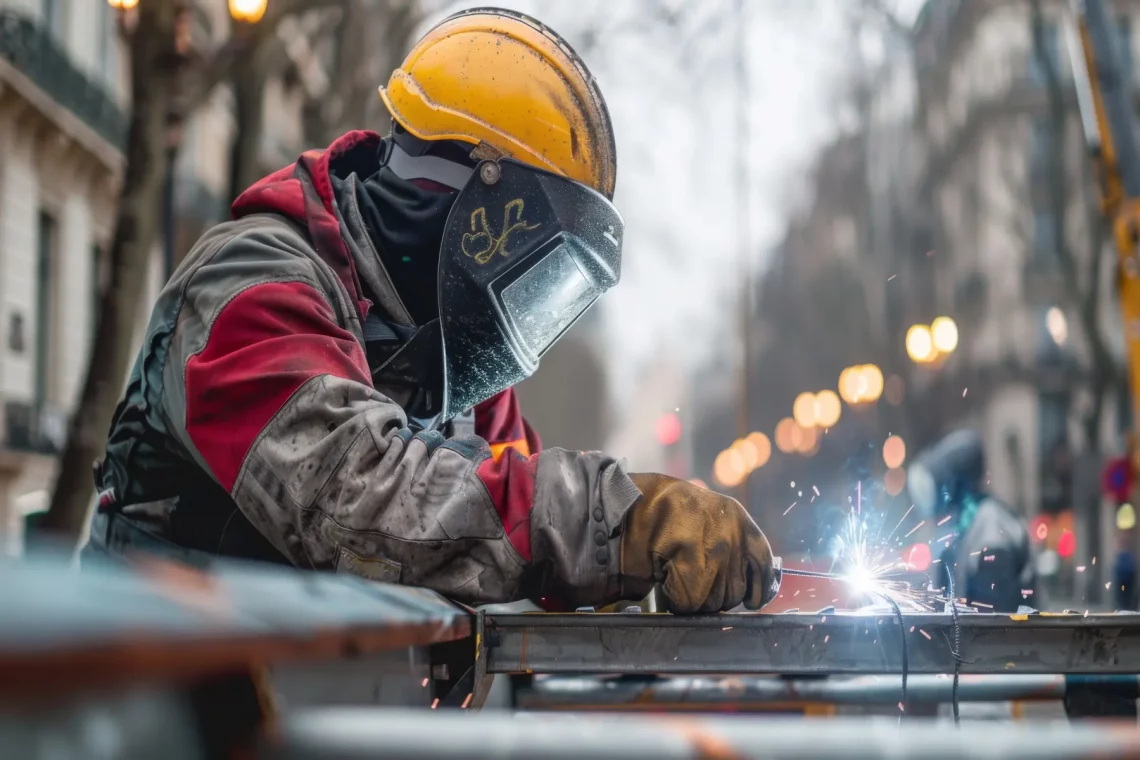
For many skilled workers, moving abroad for work is an opportunity for professional development and a significant increase in income. The Netherlands has attracted specialists in technical professions for years, and welder jobs in the Netherlands continue to be in high demand. The Dutch economy relies on advanced shipbuilding, steel construction and the petrochemical industry, creating a steady demand for skilled workers.
For those taking their first steps on the international job market, however, the decision to move abroad comes with many questions. What is the Dutch welding market really like? How much can a welder earn in the Netherlands, and what determines the level of pay? What requirements and certificates are needed to start working? In this guide, we answer the most important questions and provide key information about salaries, employment conditions, required qualifications and opportunities for professional development.
Overview of the Welding Market in the Netherlands: Methods and Demand
The demand for welding services in the Netherlands varies depending on the region and industry. Before moving abroad, it is worth knowing which welding methods are most in demand and in which sectors you can find stable employment.
- MIG/MAG (131/135/136): This is by far one of the most widely used welding methods, with steady demand throughout the year. MAG welders can find employment in the fabrication of heavy steel structures, production halls and shipyards in the Rotterdam and Amsterdam areas.
- TIG (141): This method is considered one of the most specialised and best-paid welding techniques. Highly skilled TIG welders who can weld pipes made of stainless steel, duplex steel or aluminium can find work in the food, pharmaceutical and chemical industries, as well as on precision piping projects.
- Shielded metal arc welding (MMA / 111): This method is mainly used for outdoor assembly work, bridge infrastructure, hydraulic engineering projects and industrial maintenance and repair work.
Requirements for Starting Work: Certificates, Training and Language Skills
Although Dutch employers value practical skills, formal qualifications and documentation also play an important role in the recruitment process. Candidates should therefore prepare the necessary documents before leaving Poland.
ISO 9606 Welding Certificates
One of the basic requirements is a valid welding certificate compliant with the PN-EN ISO 9606 standard for steel or aluminium. It is important that the qualifications are renewed every six months by the employer or an authorised certification body, such as TÜV, UDT or the Institute of Welding.
Before signing a contract, Dutch clients often organise practical welding tests in a workshop. These may include radiographic testing (RT) or bend testing to verify the candidate’s actual welding skills.
VCA Safety Certificate
VCA (Veiligheid, Gezondheid en Milieu Checklist Aannemers) is a safety certificate that is often required for access to construction sites, production halls and industrial facilities in the Netherlands. For workers performing operational tasks, the Basic VCA certificate is generally required. The exam can be taken in Polish, both in Poland and in the Netherlands.
Foreign Language Skills
In many Dutch companies, English or German is used as the working language. Although some teams consist exclusively of Polish workers, a communicative level of English (A2/B1) makes it much easier to read technical drawings, communicate with a team leader and perform daily duties. Language skills can also provide access to better-paid assignments.

How Much Does a Welder Earn in the Netherlands? Realistic Rates and Living Costs
Wages in the welding industry depend primarily on the welding method, experience, qualifications and type of employment. Welders working in the Netherlands may also receive additional payments for shift work, overtime, night work and weekend work.
Net Hourly Rates
- Entry-level MIG/MAG welder: EUR 14.00–16.50 net per hour.
- Experienced structural welder (MIG/MAG/136): EUR 16.50–19.00 net per hour.
- TIG welder (pipes, stainless steel, RT testing): EUR 18.00–23.00 net per hour when working through an agency, or more when working independently as a ZZP contractor.
The basic hourly rate may be increased by overtime allowances (+25–50%), night-shift allowances (+15–30%) and weekend work allowances, which can reach as much as +100%.
Example of a Monthly Cost of Living Budget
With earnings of approximately EUR 2,600–3,200 net per month, based on a 40-hour working week, an entry-level worker should also take regular living expenses into account:
- Accommodation: EUR 400–550 per month. This amount is often deducted directly from the salary by the agency.
- Health insurance (zorgverzekering): approximately EUR 130–150 per month.
- Food and household supplies: approximately EUR 300–400 per month.
Conclusion: How to Safely Find a Welder Job in the Netherlands
Legal and well-paid employment abroad is within reach if you prepare properly and approach the recruitment process carefully. To minimise the risk of problems, it is worth following a few simple steps:
- Check your certificates: Make sure your ISO 9606 qualifications are valid and translated into English.
- Obtain a VCA certificate: Complete the course in Poland if possible. This can strengthen your application and prepare you for a wider range of job opportunities.
- Choose a reputable agency: Use only agencies listed in the Polish KRAZ register and holding a Dutch certification or membership with ABU or NBBU.
- Prepare for practical tests: Before leaving, practise welding in difficult positions, such as HL-045, PF and PC, so that you can successfully pass welding tests on site.
A stable labour market, good earning opportunities and favourable social conditions continue to make welding an attractive profession in the Netherlands. Skilled welders are valued specialists who, with the right experience and commitment, can build a stable professional and financial future.
Related articles:
- https://blog.europa.jobs/en/art-worker-accommodation-in-the-netherlands-10-things-worth-checking-before-you-leave/
- https://blog.europa.jobs/en/art-earnings-life-in-the-netherlands-2026-guide-by-europa-jobs/
FAQ
1. How much does a welder earn in the Netherlands?
Pay depends primarily on experience, welding method, certificates and the type of employment. An entry-level MIG/MAG welder can earn around EUR 14–16.50 net per hour, while experienced TIG welders can earn around EUR 18–23 net per hour or more when working independently.
2. What certificates does a welder need in the Netherlands?
The basic requirement is a valid welding qualification compliant with the PN-EN ISO 9606 standard. A VCA safety certificate is also often required for work on construction sites and in industrial facilities. An employer may additionally conduct a practical welding test to assess the candidate’s actual skills.
3. Does a welder in the Netherlands need to speak English?
English is not mandatory for every job offer, but communicative English makes everyday work much easier. It allows workers to communicate more effectively with team leaders, colleagues and inspectors, as well as better understand technical documentation and safety procedures.
4. Where can I look for welder jobs in the Netherlands?
You can look for jobs directly with Dutch employers or through reputable recruitment agencies. It is worth comparing not only the hourly rate but also accommodation, health insurance and transport costs, as well as the required certificates. This makes it easier to determine how much money you will actually have left after covering your basic expenses.