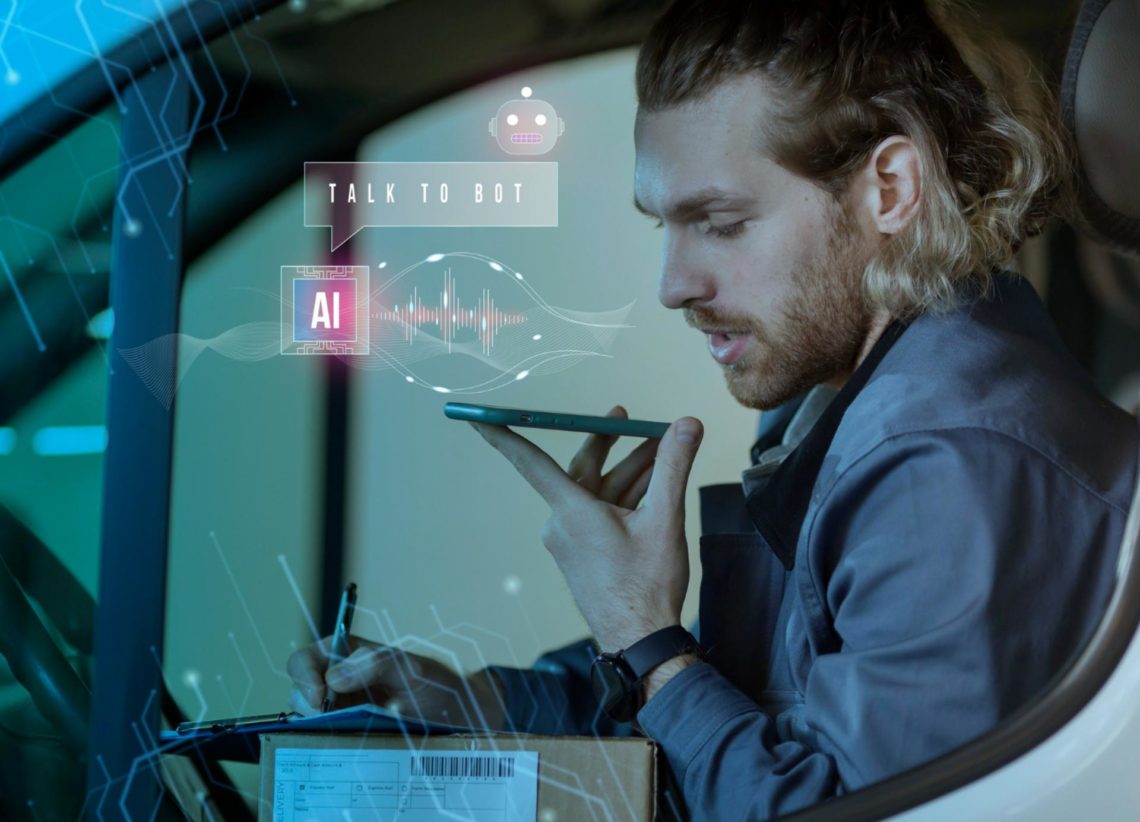
Will our roads look different in the near future? Will they be full of AI-powered self-driving cars? This scenario seems probable given how fast AI in self-driving cars is developing. The development of self-driving car technology is, in fact, the biggest revolution in transportation since the steam engine. Thanks to artificial intelligence, we will probably soon see safer roads, reduced congestion, and increased mobility for all, including disabled road users. In this post, we want to show you how the roads of tomorrow can look with the support of AI.
AI in self-driving cars: The beginning
First off, let’s start with a short history lesson. We can generally say that it all started with the first trials and experiments in AI and computer vision, but the true revolution in self-driving technology is a fairly recent thing from just a few years ago. Large companies like Google, Tesla, BMW, and Waymo lead the development of autonomous vehicles, leveraging AI algorithms to interpret sensor data, make real-time decisions, and navigate complex environments.
When it comes to AI in self-driving cars, the crucial part is the integration of AI-fueled systems that are capable of mimicking the way the human brain and cognition work. These systems are trained on vast amounts of data to recognize patterns on the roads, predict possible outcomes (even the unlikely ones), and learn from experience (autonomous cars need to ride for millions of miles to gather a sufficient amount of data). Other AI-related techniques, such as deep learning, reinforcement learning, and computer vision, are also important. Put it all together, AI in self-driving cars enables them to perceive their surroundings, understand road signs, interpret traffic patterns, and react to immediate obstacles on the road.
The role of AI in self-driving cars
Put shortly, AI serves as the “brain” behind self-driving cars, giving them the cognitive abilities needed to operate safely and efficiently. Here’s a closer look at how AI contributes to various aspects of autonomous driving. There are four major aspects of this question:
PERCEPTION
One of the biggest challenges in autonomous driving is giving those vehicles the power to perceive and interpret their surroundings correctly and timely. AI algorithms analyze data from many different sensors, including cameras, lidars, and radars, to create a comprehensive understanding of the environment. This includes:
- Objects
- Lane markings
- Pedestrians
- Potential dangers and obstacles
DECISION-MAKING PROCESSES
Making quick decisions is crucial for navigating dynamic road scenarios. AI-powered decision-making systems leverage complex algorithms to evaluate various factors, such as traffic conditions, road geometry, and pedestrian behavior, to determine the safest and most efficient course of action. These systems need to continually assess risks, plan next steps, and adapt to changing circumstances to ensure a smooth and secure ride.
MAPPING AND LOCALIZATION
Accurate mapping and localization of what’s going on are essential for precise navigation on the road. AI algorithms use process sensor data and compare it to pre-existing maps to determine the vehicle’s position on the road.
PREDICTIVE ANALYSIS
Lastly, anticipating the behavior of other road users is critical for safe driving. This is where predictive analytics steps in. AI-driven predictive analysis models analyze historical data and real-time inputs from all the sensors to try and predict the actions of pedestrians, cyclists, and other road users. By predicting potential scenarios, self-driving cars can proactively adjust their driving behavior to avoid collisions and ensure smooth and safe traffic flow.
Challenges and limitations of AI in self-driving cars
While AI has a huge potential in autonomous driving, there are still at least two challenges and limitations that need to be addressed.
SAFETY AND RELIABILITY
For starters, ensuring the safety and reliability of self-driving cars in all driving conditions remains the biggest concern. Despite extensive testing, AI systems still encounter unforeseen circumstances or make errors in complex scenarios. Achieving full safety and predictability in rare scenarios poses a significant challenge for AI companies.
LEGAL CONSIDERATIONS
AI also raises some legal problems. Who is responsible in the event of an accident involving a self-driving car? How should AI prioritize conflicting objectives, such as avoiding collisions versus protecting passengers or pedestrians? Addressing these ethical and legal challenges is essential for the adoption of autonomous vehicles.
Naturally, the regulatory landscape surrounding autonomous driving is still evolving, and legislators are concentrating on diverse issues related to safety standards, data privacy, and cybersecurity.
And what about the future?
Despite the challenges, the future of autonomous driving looks promising! As those algorithms become more sophisticated and capable in the future, self-driving cars will surely be better at navigating complex road conditions.
Moreover, the integration of AI with other technologies, such as 5G connectivity, edge computing, and advanced sensor technologies, will also boost the capabilities of self-driving cars, enabling seamless communication between vehicles and infrastructure and unlocking new possibilities for transportation efficiency and safety.
Wrapping up
There is no doubt that AI is shaping the future of not just self-driving car technology but transportation as a whole. Will AI revolutionize the way we move? To some extent, for sure! And while some of the mentioned challenges remain, the potential benefits of autonomous driving, such as safer roads and increased accessibility, outweigh those issues. As we navigate the roads of tomorrow, AI will continue to guide us toward the future where personal transportation should be smarter, safer, and more sustainable.
If you’d like to find out more about how AI is currently being implemented, take a look at this article on Addepto’s blog: Artificial intelligence in self-driving cars.