
The transformation of urban transport over the past two decades is an excellent example of how digitalization can completely redefine traditional professions. At the beginning of the 21st century, ordering a taxi still meant calling a dispatch center or patiently looking for an available vehicle at a designated taxi rank. The emergence of mobile apps completely changed this model. This article presents the key stages of this transformation, which fundamentally changed the taxi driver profession and created an entirely new reality for both drivers and passengers.
The Pre-Uber Era: The Traditional Taxi Driver Profession Before 2010
Before smartphones became an essential part of everyday life, being a taxi driver was associated with a certain level of prestige, financial independence and a distinctive lifestyle. However, obtaining an official taxi licence was a long, demanding and expensive process. To legally transport passengers, candidates had to meet numerous formal requirements.
The main challenges of that era included:
- Difficult city knowledge exams: Drivers had to have an excellent memory and know hundreds of streets, shortcuts, hotels and landmarks without the help of GPS navigation.
- High financial barriers: Obtaining a local taxi licence, installing a certified taximeter and fiscal cash register, as well as adapting the vehicle, required significant initial capital.
- Membership in a taxi company: Working independently was particularly difficult. Most drivers had to pay monthly fees for access to radio communication and jobs dispatched by the central office.
The daily routine of a taxi driver largely revolved around waiting. Spending long hours at taxi ranks encouraged the development of local professional communities and a certain hierarchy, but it was also inefficient in terms of managing working time. Fares were relatively high, which allowed drivers to earn good money, but at the same time limited the customer base to people with higher incomes or passengers who urgently needed a taxi.
The Arrival of Uber and the Technological Revolution in Transport
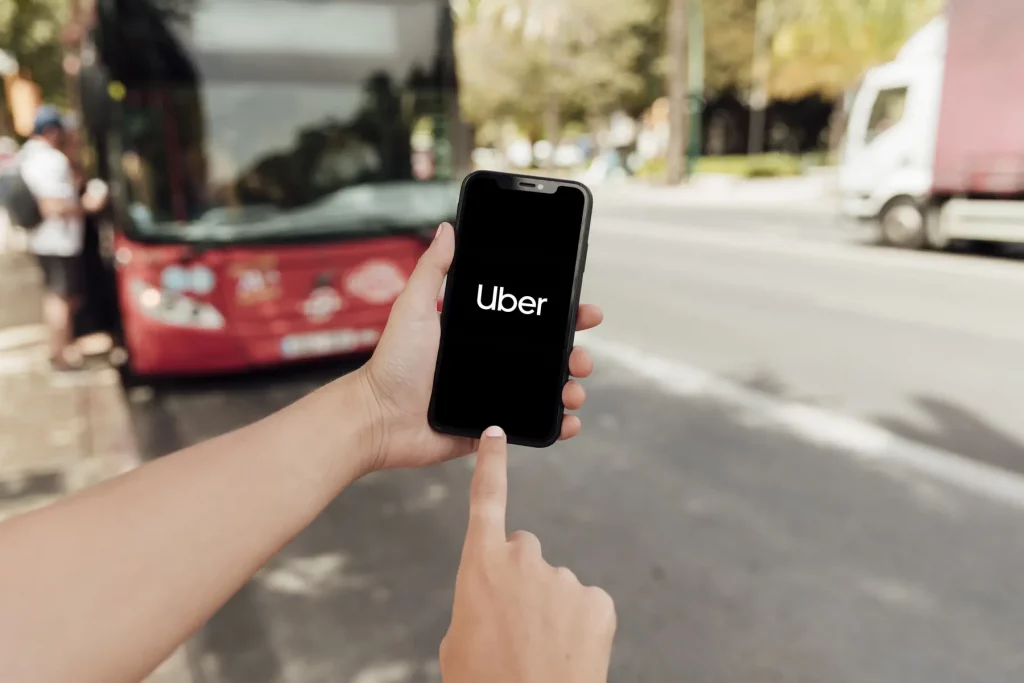
The real revolution began in the early 2010s with the international expansion of the American company Uber and other ride-hailing platforms. Simple mobile apps reduced dependence on traditional dispatch centers and allowed drivers and passengers to connect directly through geolocation technology. This was a major turning point that significantly lowered the barriers to entering the driving profession.
Technology helped solve two major problems in the traditional taxi market. First, thanks to accurate GPS maps, detailed knowledge of the city was no longer such a significant barrier to starting work. Second, the app automated both fare calculation and payment. Passengers quickly embraced the new model because of its convenience, cashless payments and transparency: the price of the journey could be known in advance, significantly reducing concerns about excessive or unfair fares.
For the labour market, however, this also meant that many more people could start working as drivers. As a result, competition within the industry increased significantly.
The Era of Protests and Regulation: Tradition vs. Modernity
The sudden arrival of large numbers of drivers without traditional taxi licences caused considerable dissatisfaction among conventional taxi drivers. Between 2014 and 2019, numerous protests took place across Europe, including in Poland. Licensed taxi drivers accused platforms of, among other things, using excessively low fares, creating unfair competition and avoiding certain tax obligations. The conflict eventually reached the political level, forcing governments to intervene and introduce new regulations.
In Poland, this situation led, among other things, to amendments to road transport legislation, which became informally known as “Lex Uber.” The aim was to bring the rules applying to traditional taxis and passenger transport services ordered through apps closer together. The main changes included:
- Mandatory licensing: Drivers transporting passengers through apps were required to have an appropriate permit or licence.
- Electronic payment systems and taximeters: Certified mobile solutions could be used instead of traditional physical devices.
- Vehicle identification: Vehicles used for transport through platforms had to comply with applicable vehicle identification requirements, similar to traditional taxis.
These changes contributed to the further professionalization of app-based passenger transport services and partially reduced tensions between the different players in the market.
The Modern Taxi Driver Profession: A Hybrid Reality and a Changing Labour Market
Today, the differences between traditional taxi companies and modern platforms have become much less pronounced. The taxi driver profession now operates within a hybrid model. Drivers working with established taxi companies often also use platforms such as Uber or Bolt, while drivers who primarily work through apps increasingly focus on maintaining their vehicles in good technical condition and complying with current regulations.
Fleet partners play an important role in this new reality. These companies can take care of certain administrative and accounting tasks, assist with tax-related obligations and provide drivers with suitable vehicles. Thanks to this model, starting work in the passenger transport sector has become easier, while drivers can enjoy greater flexibility and choose when and how long they want to work.
Earning opportunities in passenger transport are becoming increasingly attractive, not only in the domestic market. Many people choose to move abroad and develop their professional careers as drivers. To find reliable and secure job opportunities, it is worth using trusted recruitment platforms. The europa.jobs portal offers a wide selection of verified vacancies in the transport and logistics sector across Europe and can be a good starting point for people who want to develop their careers abroad.
Conclusion: Advantages and Disadvantages – What Does Being a Taxi Driver Look Like Today?
The major revolution brought about by mobile apps has had both positive and negative consequences. From the passenger’s perspective, the quality, availability and convenience of services have improved significantly. For drivers, however, the situation has become more demanding. The taxi driver profession has lost its former relatively closed character and has become much more accessible, with success now depending, among other things, on efficiency, the ability to use modern technology and adaptability to changes in the market.
Although earnings per individual journey may be lower than in the past, the steady flow of orders generated by digital platforms makes it possible to achieve relatively stable income. The future of the profession will undoubtedly bring new challenges – from rising vehicle maintenance and operating costs to the development of autonomous vehicles. One thing is certain, however: technology that once caused major conflicts within the industry has now become an essential part of modern urban transport.
Related articles:
- How Much Can You Earn in Poland Working as a Driver for Popular Apps Like Uber and Bolt?
- How much does a bus or truck driver earn in the Netherlands and Germany? Salary comparison
FAQ
1. How has the taxi driver profession changed since the arrival of Uber and other apps?
The profession has become more accessible and flexible. Apps make it easier to connect with passengers, navigate and manage payments. At the same time, they have increased competition and significantly changed how drivers organize their work.
2. Does an Uber or Bolt driver need a taxi licence?
The requirements depend on the type of service provided and the legal framework under which the driver operates. Passenger transport is regulated by law and may involve specific requirements concerning drivers, vehicles and the way the service is provided. The exact conditions may vary depending on the type of transport and applicable regulations.
3. What is a fleet partner and why do drivers work with such companies?
A fleet partner is a company that works with drivers and may provide a vehicle, handle certain administrative procedures or assist with accounting obligations. This can make it easier to start working through a platform, particularly for people who do not want to set up and run their own business.
4. Is working as an Uber or Bolt driver profitable?
Profitability depends primarily on the number of hours worked, the number of completed trips, fuel and vehicle maintenance costs, as well as the commissions charged by the platform or fleet partner. Flexible working hours and the opportunity to work during periods of high demand can help drivers achieve a more stable income.